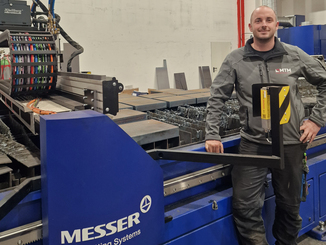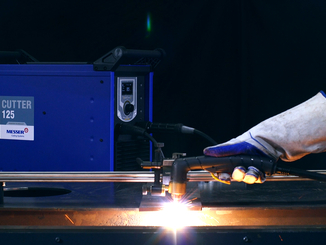
Precision, value creation, and independence: To remain competitive in the plant engineering sector, an Austrian family-owned company is relying on modern cutting technology. At the heart of the new manufacturing strategy is a cutting platform that offers both oxy-fuel and plasma cutting.
In plant engineering, tight tolerances and process reliability are essential. Kremsmüller Industrieanlagenbau KG, headquartered in Steinhaus near Wels, employs approximately 2,300 people and delivers turnkey projects—from engineering through installation—for industries such as petrochemicals, energy and the environment, metallurgy, paper, chemicals and pharmaceuticals, food, and manufacturing. Quality is essential, and the standards for the company’s own manufacturing are correspondingly high.
Old flame-cutting system is reaching its limits
Deviations—for example, in the cutting process—have a direct impact on downstream processes. Inaccurate contours mean additional work is required during joining and welding, longer turnaround times, and, in the worst case, a decline in quality. As a result, in 2023, the company turned its attention to modernizing the old flame-cutting system. “We had increasingly reached technical limits with the existing system,” says Hannes Gattermayer, Production Manager at Kremsmüller, describing the situation. “It became particularly difficult to maintain tight tolerances.” This was not sustainable in the long term given Kremsmüller’s standards.
At the same time, vertical integration was limited: tank bottoms had to be machined externally, and there were also restrictions on cutting pipes with defined bevels. This resulted not only in lost potential for value creation but also in reduced flexibility in project execution. For Kremsmüller, it was therefore clear: If the company was going to invest, it would be in a system capable of more than just cutting. “We wanted to increase precision while also expanding our vertical integration and integrating new machining capabilities,” adds Gattermayer.
© Messer Cutting Systems
More Than Just a Machine Replacement
The replacement of the flame-cutting system was therefore intended to be a step forward for the entire company. The goal was a CNC cutting platform for large-format sheet metal that combines oxy-fuel and plasma cutting, bevel cutting, tube processing, vessel bottom processing, and marking in a single system. At the same time, it was intended to offer ergonomic improvements.
In addition to the technical performance specifications, the long-term partnership was particularly important. “For us, it wasn’t just what the machine could do that mattered, but who was behind it,” says Gattermayer. Short response times, service availability in Austria, and structured project management were the key criteria. Given the importance of the project, implementation was to take place without long wait times. According to its own statement, Messer Cutting Systems was able to offer project planning with defined milestones. In the end, the decision was made in favor of the Omnimat from Messer Cutting Systems.
The printing area measures 4,000 × 18,000 mm
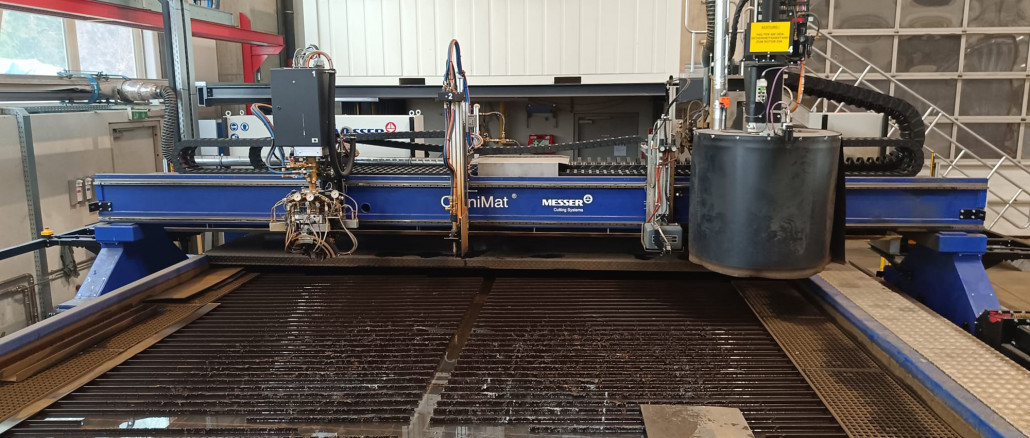
With this system, Kremsmüller is relying on a CNC cutting machine designed for large work areas and demanding applications. It combines cutting-edge technology, ease of use, and precision. Thanks to its robust gantry design and guide profiles, it delivers cutting accuracy and contour fidelity, even under industrial production conditions.
The cutting table, with a working surface of 4,000 × 18,000 mm, enables the machining of large-format components. The system also features two cutting zones, separated by a partition wall. The positioning speed of up to 50 m/min, combined with high acceleration and rapid height adjustments, further reduces downtime.
The system is controlled and programmed using Messer’s Omniwin CAD/CAM software. It supports oxy-fuel, plasma, and laser cutting processes and enables efficient production of varying batch sizes and small series, as is typical in plant engineering. Operating with CAD, import, and nesting for vertical and beveled parts simplifies workflows.
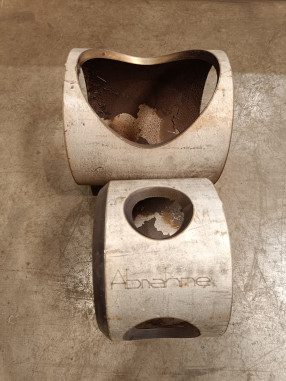
The cutting system also includes the newly developed “Boilerend NT” module for machining vessel bottoms. A program can be generated in just a few steps, starting with the import of the geometry in STEP format. “The new software module is a highlight for us. It makes it significantly easier to program and machine vessel bottoms with a high degree of precision,” explains Gattermayer.
© Messer Cutting Systems
The system handles many cutting processes
“One of the Omnimat’s major advantages is its flexibility. Whether oxy-fuel, underwater, or dry plasma; whether vertical cutting, bevel cutting, or with a drilling unit and marking tools—it’s suitable for a variety of cutting and machining processes,” says Abraham Balendran, Head of Product Management at Messer Cutting Systems. “To meet Kremsmüller’s requirements, we combined various equipment options to create a multifunctional machining platform.”
Technically, the machine covers a wide range of applications. The Alfa oxy-fuel torch cuts sheet metal up to 300 mm thick and reduces setup times and wear thanks to its height sensing and tool-free nozzle change. The automatic, continuously rotatable D/AFL three-torch unit for V, X, Y, and K cuts enables the production of bevel cuts at angles ranging from 15° to 60° and with tight tolerances for sheet thicknesses up to 80 mm.
The Hifocus 600i neo plasma cutting system enables cutting of material thicknesses from 0.5 to 150 mm, even underwater, with high cut quality, particularly for CrNi materials. Thanks to the continuous rotational movement of the C-axis, the Skew Rotator Infinity plasma torch enables bevel cuts along almost any contour, even underwater.
Greater Independence Through Vertical Integration
Plasma cutting technology provides the foundation for vessel bottom processing. Vessel bottoms with diameters up to 4,200 mm can now be processed on the system. Laser measurement ensures that component geometries are captured and cutting paths are adjusted.
With the PTC500 pipe rotation axis, Kremsmüller is expanding its cutting technology with another key component. Pipes up to 6 m in length and 500 mm in diameter—including weld bevels of up to 45°—can be processed directly on the system. This largely eliminates the need for external machining steps. Component marking is also automated using a dot peen marker. It enables high-speed marking of text, numbers, lines, and contours on the component.
“The independence from third parties that we’ve gained thanks to these new processing capabilities is an advantage for us,” says Gattermayer. “We’re more flexible, faster, and better able to control our quality standards.”
Focus on Efficiency and Ergonomics
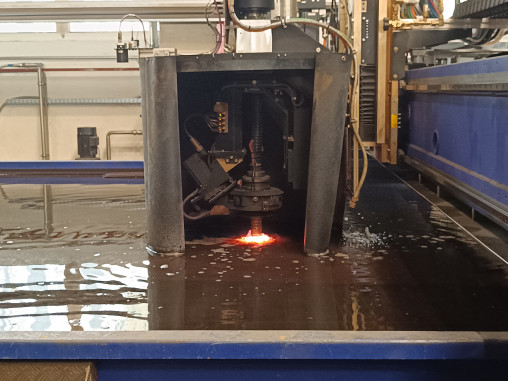
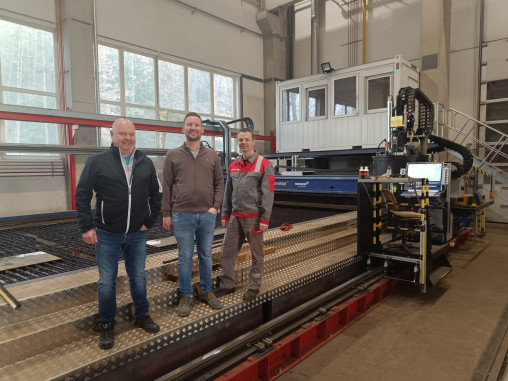
In addition, Kremsmüller focused on optimizing working conditions. The goal was to increase productivity while reducing the physical strain on employees. At the heart of this effort is the water-jet cutting table with water level control and a belt conveyor system. The water-jet cutting table is designed for both above-water oxy-fuel cutting and underwater plasma cutting. Raising and lowering the water level reduces emissions, noise, and thermal stress.
The belt conveyor system offers a key advantage: it automatically removes the slag from the cutting area. “In the past, the tables had to be emptied and cleaned by hand. That was physically demanding and time-consuming,” says Gattermayer. “Today, slag removal is automated. This reduces the physical strain on our employees and increases efficiency.”
The system is supplemented by a sheet-cleaning system with high-pressure nozzles. It ensures clean sheet metal surfaces before the cutting process and contributes to cut quality.
© Messer Cutting Systems
Partnership as a Key to the Project’s Success
In a project of this magnitude, the plant is only one part of the success. Collaboration is just as crucial. Until its completion in July 2025, the project proceeded with close coordination between both teams. The goal was to keep downtime to a minimum and get the plant up and running. “From the very beginning, the collaboration was very cooperative and solution-oriented,” says Gattermayer. “Coordination was straightforward, adjustments were implemented quickly, and agreements were honored.”
Just three and a half weeks after installation began, the first cut was completed—a testament to the structured project organization. The integration of the pipe rotation axis and the implementation of the container bottom machining were also carried out without any issues. “Projects like this only work when both sides communicate openly and make decisions quickly,” explains Gerhard Wimmer, Head of Messer Cutting Systems Austria. “Kremsmüller’s organizational structure and short decision-making processes contributed to the smooth execution of the project.”
By investing in the cutting system, Kremsmüller has technically realigned its cutting and prefabrication capabilities. The combination of gantry technology, plasma and oxy-fuel cutting processes, bevel cutting, a pipe rotation axis, and container bottom machining makes the system a central component of the company’s value creation.
The new system combines precision, versatility, and process integration. Dimensionally accurate cuts, reproducible bevels, in-house machining of complex components, and automated marking create seamless workflows. For Kremsmüller, the new facility represents a major leap forward. Gattermayer sums it up: “We have increased our vertical integration, stabilized our processes, and improved working conditions. This strengthens our competitiveness.”
New Cutting System Strengthens the Company
Kremsmüller believes it will remain well-positioned in the future with the new cutting system. “It gives us the flexibility and vertical integration we need to remain competitive even under difficult conditions,” reports Gattermayer. After all, energy prices, costs, and bureaucracy pose challenges for the plant engineering industry. “Our task is to continue supplying our customers with the quality they’ve come to expect,” says Gattermayer.
One focus is therefore on greater energy efficiency and the expansion of energy projects, such as in the areas of process heat pumps, storage systems, and heat exchangers. At the same time, the further development of the company’s own manufacturing operations remains a key priority. Gattermayer adds: “The more value we can create in-house, the more stable we are, even in times of crisis.” He also has clear advice for companies looking to invest: “Machines should be designed to be as versatile as possible. This ensures capacity utilization and future viability.”