AI libraries reduce the reality gap – ABB Robotics expands Robotstudio with Nvidia Omniverse technologies. The aim is to train robots more realistically in digital twins and transfer industrial applications more precisely from simulation to production.

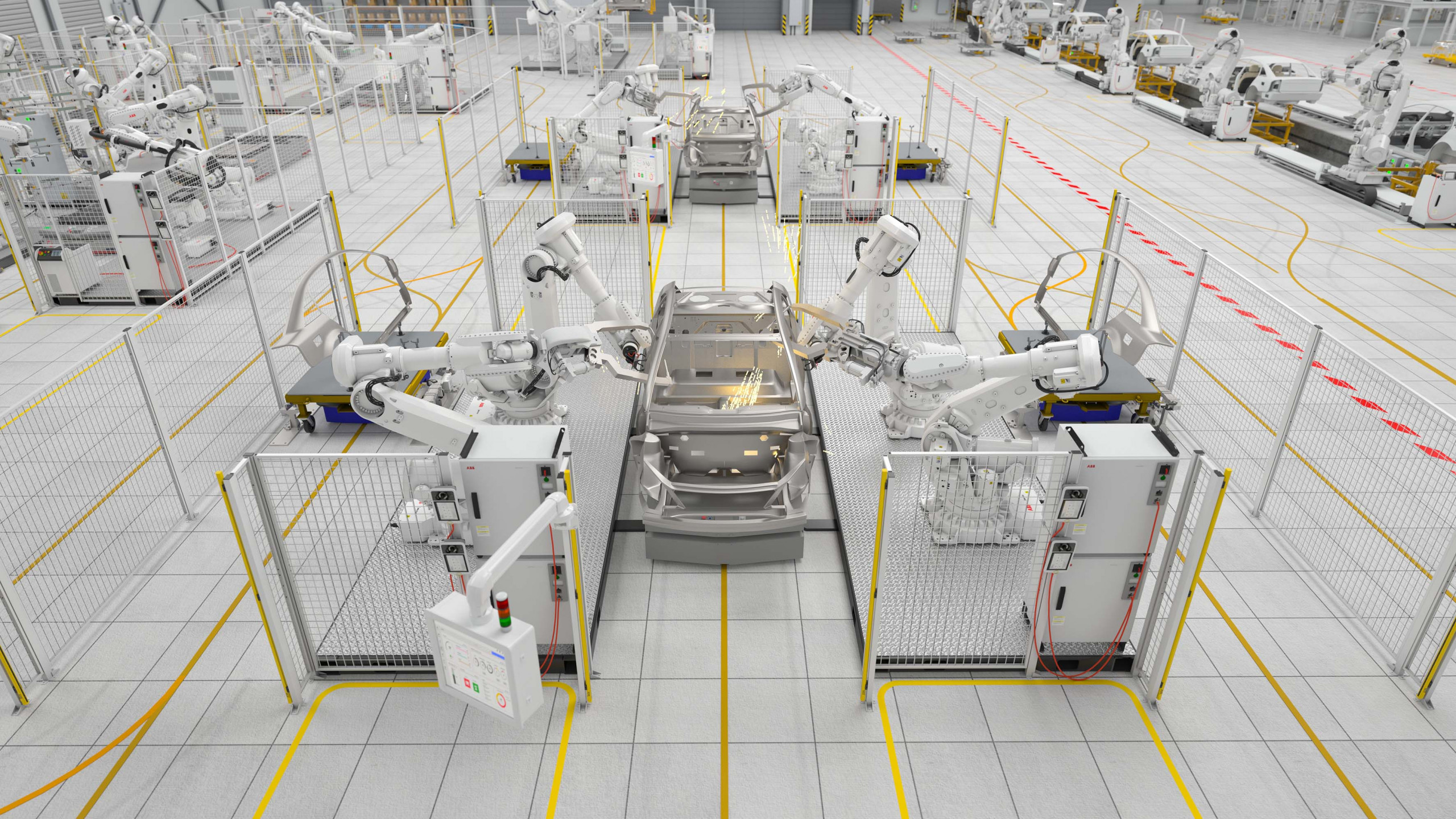
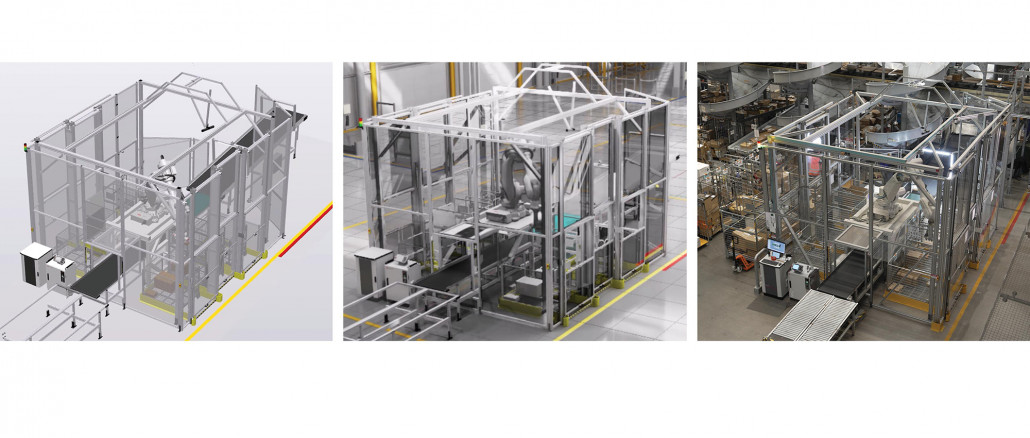
ABB Robotics will now integrate the Nvidia Omniverse libraries into its in-house software Robotstudio. This step will enable industrial companies to implement physical AI in their real-world robotics applications. The collaboration makes it possible to combine ABB’s Robotstudio programming and simulation suite with the simulation capabilities of the Nvidia Omniverse libraries. These libraries allow physically realistic simulations to be carried out. This combination should make it possible to close the long-standing technological “sim-to-real” gap. Developers should be able to map robots as digital twins in a simulation and collect synthetic data that can be used to train physical AI models. Regardless of size or industry, it should become easier to use AI-controlled robotics for industrial workflows.
The resulting realistic simulations and foundation models are continuously optimized in Robotstudio Hyperreality. The system is also continuously improved through feedback from the field. The foundation models can be used to train any number of ABB robots anywhere in the world with the reliability and accuracy required by the industry.
“This paves the way to make physical AI a reality in industry worldwide,” explains Marc Segura, President of ABB Robotics. “For more than 50 years, ABB Robotics has been driving intelligent industrial automation. We pioneered the development of the first generation of all-electric industrial robots, introduced digital twin simulations using Robotstudio, and launched a new type of autonomous and versatile mobile robot. By working with Nvidia, we are now making the widespread use of physical AI in industry possible.”
“The industrial sector needs physically accurate simulations to bridge the gap between virtual training and real-world deployment of AI-driven robotics across the board,” said Deepu Talla, Vice President of Robotics and Edge AI at Nvidia. “The integration of Nvidia Omniverse libraries into Robotstudio combines our advanced simulation and computing power with ABB Robotics’ unique virtual control technology. This accelerates the process by which manufacturers of all sizes bring complex products to market.”
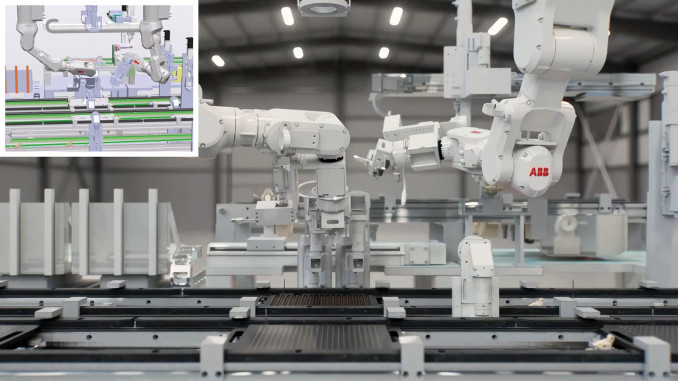
“Sim-to-real” gap is narrowing
Until now, there has been a crucial difference between theory on the computer and practice in the factory: the “sim-to-real” gap. Differences in light or materials made it difficult to plan production processes purely virtually.
Thanks to high-precision simulations and synthetic data in Nvidia Omniverse, intelligent robots should achieve a 99% match between model and reality. ABB has a so-called virtual controller, a fully functional and tested virtual copy of the real, physical controller that controls the robot in reality. As a result, simulation and real performance match to an impressive degree. Together with Absolute Accuracy technology, which minimizes inaccuracies from the original 8 to 15 mm to 0.5 mm, ABB offers a new level of precision in the virtual world.
Manufacturers can now design, test and optimize production lines virtually with a significantly increased reality factor. The result is efficiency gains: set-up and commissioning times are said to be reduced by up to 80 %, while the elimination of prototypes can cut costs by up to 40 %. It is understandable that the market launch of complex products can be accelerated enormously in this way – by half, according to ABB.
ABB Robotics is also looking into integrating Nvidia’s Jetson edge computing platform into its OmnicoreTM controller. The aim is to make real-time AI available directly on the robot for the entire portfolio. Previous milestones in the collaboration have been the integration of the Nvidia Jetson platform into autonomous mobile robots with AI-supported navigation (Visual Slam technology) and joint work on gigawatt-scale AI data centers.
First applications already in practice
Robotstudio Hyperreality supports industrial customers of all sizes and sectors in a wide range of applications. The first pilot customers are already testing the functions ahead of the official market launch, which is scheduled for the second half of 2026 for all 60,000 ABB Robotics Robotstudio users.
Foxconn, the world’s largest contract manufacturer of electronics, is piloting the first joint use case in the production of consumer electronics. Automating the assembly of small parts in this area is particularly challenging, as different model variants require different production methods. In addition, the delicate metal structure of filigree control elements requires high-precision control during gripping and assembly, which until now has often led to time-consuming debugging and high use of engineering resources. Foxconn is now training its assembly robots virtually with the help of Robotstudio Hyperreality. By using synthetic data, real production processes are perfected in various scenarios before being transferred to the production line with an accuracy of 99%. This virtual optimization reduces set-up times and costs by eliminating the need for physical tests.
“In consumer electronics manufacturing, precision is everything. Until now, this level of accuracy and detail was simply not achievable in simulations and digital twins,” explains Dr. Zhe Shi, Chief Digital Officer of Foxconn. “We see enormous potential in the collaboration between ABB Robotics and Nvidia. Thanks to advanced AI inference, we can parallelize engineering processes, ramp up production faster and significantly accelerate our overall product development.”
Workr, a California-based robotics company for industrial manufacturing solutions, is now making this technology available to small and medium-sized companies in the USA. At Nvidia GTC 2026 in San Jose, Workr showcased AI-powered robotic systems based on ABB technology and trained using Nvidia Omniverse libraries using only synthetic data. These robots can be operated without any programming knowledge. For this purpose, industrial-grade ABB robotics were combined with the company’s own AI platform Workr Core. The result helps manufacturers to overcome the shortage of skilled workers: the robots learn new tasks within minutes and can be operated by any employee.
“This collaboration is about making industrial AI practical today,” explains Ken Macken, CEO and founder of Workr. “Together with ABB and Nvidia, we are proving that advanced automation works for manufacturers of all sizes.”
Web:
www.abb.de/robotics