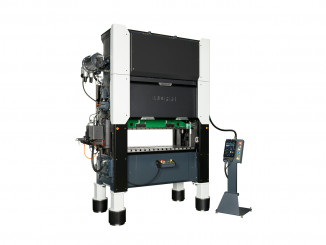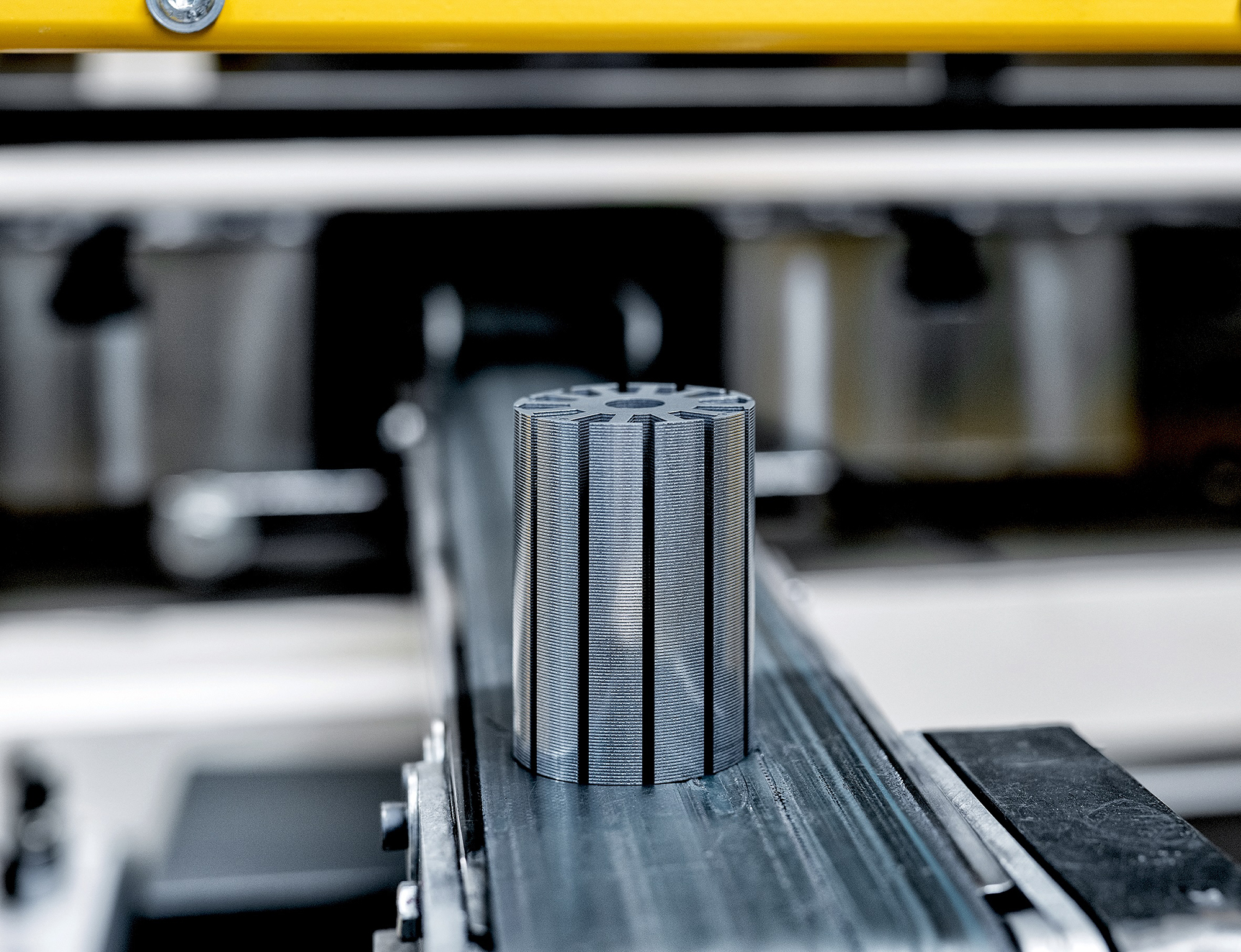
Twelve servo axes per automatic punching press are now possible: With the B3 machine control system, Bruderer doubles the maximum number of BSA servo axes that can be used on automatic punching presses—previously limited to six. The integrated axes perform tasks in the punching process and within the die, and can control, among other things, strip transport, processing modules, and positioning axes.
This enables higher production speeds as well as additional design features, as reported by the Swiss machine manufacturer. In addition to higher cycle rates in production, the technology expands the design possibilities in toolmaking. Functions that previously required mechanical axis drives can now be implemented using servo-electric systems. The patented BSA technology has been on the market since 2019.
Various Functions in a
Single
Control System
The servo axes support various functions within the punching process. The machine, feed mechanism, and axes are integrated into a central control system with a unified user interface. Monitoring functions for torque, position, synchronous operation, and enable/disable can be combined to monitor the process sequence and ensure process reliability.
The use of servo axes allows for increased belt speed and stroke rate. According to the manufacturer, for example, increases from 450 to 1,000 strokes per minute are possible. This results in higher throughput rates, which in turn reduce unit costs.
In toolmaking, servo axes enable the implementation of additional functions. Replacing mechanical axis drives with servo drives reduces costs, wear, and maintenance requirements.
The drive and control electronics are located in the control cabinet of the automatic punching machine, eliminating the need for an additional external control cabinet. The motors are designed for continuous operation and cover a torque range of 1 to 125 Nm. Versions with planetary gearboxes and water-cooled high-torque variants are available as options.
Three functional classes for different applications
The BSA series is divided into three functional classes. Class 1 modules are speed-controlled machining modules. For example, they control tool-integrated carbide end mills, tap cutters, or drills independently of the machine cycle.
Class 2 modules are used for point-to-point positioning of actuator axes. Potential applications include automated strip threading and automatic correction of strip guides. This reduces setup times.
Class 3 modules cover a large portion of BSA applications. Here, for example, the servo axes control belt transport—either independently or in combination with BSV servo feeders. Other applications include feeding and stacking units, assembly and cross feeders, ejectors, and drag fingers.
Strip Tensioning for High Feed Rates
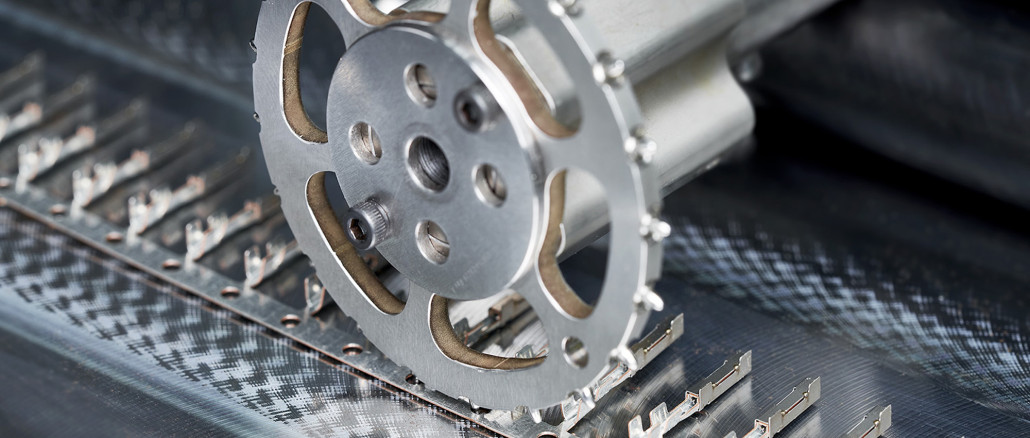
Another application of BSA technology is tool-integrated strip tensioning, for example, using a spiked wheel. Alternatively, an external system is available that can be mounted on and retrofitted to the automatic punching machine. Both variants can also be combined with BSV servo feeders.
The additional pull transport keeps the strip taut during the punching process. Bruderer recommends its use especially for long dies, high stroke and feed speeds, and materials with thicknesses between 0.05 and 0.1 mm.
During strip transport, the patented control system continuously adjusts the servo axes to the angular position of the crank mechanism. This occurs even with varying stroke rates and feed rates. As a result, the motion sequences can be adapted to and synchronized with the required punching speed. The adjustment is performed once for each die. Afterward, the saved setting operates autonomously during the ongoing process.
Web:
www.bruderer.com