A revised SSB series of band saws and a further generation of machine controls called Procontrol: Kasto Maschinenbau from Achern is launching a number of new products.
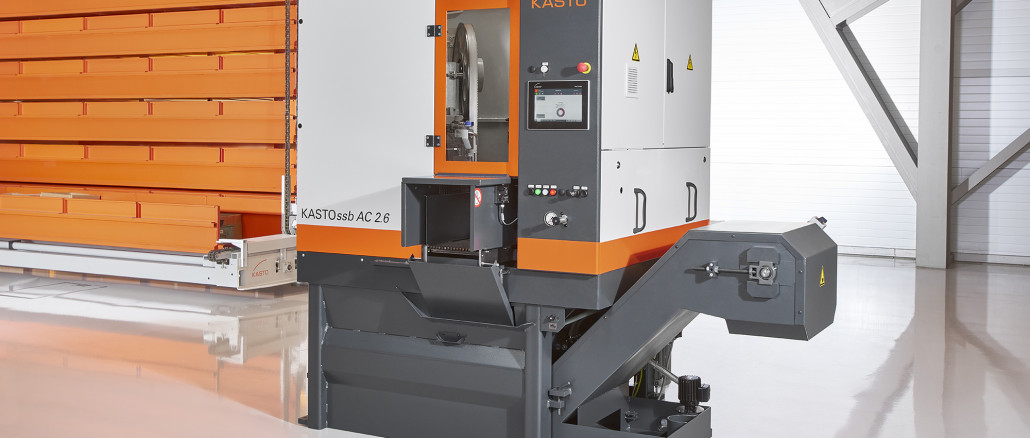
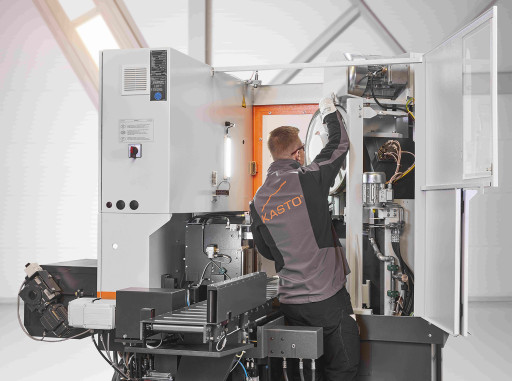
With its redesigned SSB series of automatic band saws, Kasto combines a range of design improvements with a new generation of control systems. An electromechanical saw feed reduces energy consumption; at the same time, modifications to the chip conveyor and the enclosure improve space requirements and accessibility. The Procontrol control system adds functions for operation, job planning, diagnostics, and analysis to the sawing machines.
© Kasto
Electromechanical Drive Replaces Hydraulics
The SSB series has been in use since 1985. In the current generation of heavy-duty, high-performance automatic band saws, Kasto has, among other things, redesigned the saw feed mechanism. Instead of the hydraulic system previously used, the machine is now equipped with servomotors. According to the manufacturer, the electromechanical drive consumes electrical power only during the actual sawing process. This reduces energy consumption and noise emissions compared to the hydraulic drive system.
Automatic feed control is included as standard equipment. The “Respond” function automatically adjusts the parameters to the specific application. The goal is to achieve shorter cutting times while taking the specific machining conditions into account.
The manufacturer has also modified the design of the chip conveyor. It can be mounted to the right or left of the automatic band saw. The operator specifies the direction of chip ejection when placing the order. The version that conveys chips exclusively upward reduces the risk of clogs and the discharge of coolant. Ejection heights of 600 and 1,050 mm are available.
Chip conveyor takes up less space
The chip conveyor is equipped with rollers for installation and removal. When mounted on the left side, it can be rotated 30° and then pulled out. With an ejection height of 600 mm, the space required for this is reduced from 3.6 to 2.9 m, according to the manufacturer’s specifications. This makes installation easier in confined spaces.
Split panels and hinged rear doors also improve access to the saw blade and key machine components. A viewing window at the front allows users to see into the work area as well as the roller conveyor and material feed.
One design feature of the previous series has been retained: The machine head is made of mineral cast iron. Its damping properties reduce vibrations during sawing. This is particularly important for bundle cuts as well as when machining tubes and profiles. The working range of the automatic band saw covers diameters up to 260 mm. The range of applications now explicitly includes carbide saw bands. Optionally, 34 mm-wide saw bands can be used.
Procontrol Takes Over Operation and Job Management
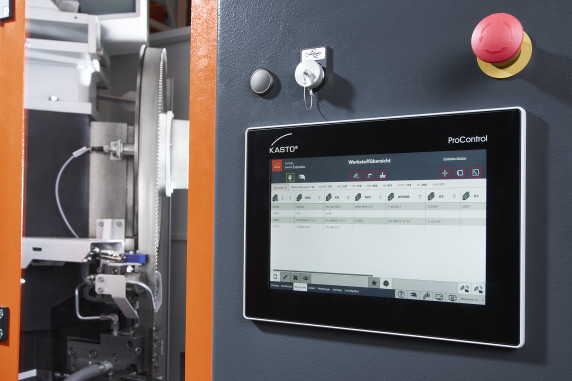
Alongside the design overhaul of the automatic band saw, Kasto is introducing Procontrol, a newly developed generation of its saw control system. It will initially be used in the Win series and will subsequently be implemented on other sawing machines. The machine manufacturer also plans to equip the new SSB with this system.
According to the manufacturer, the user interface was developed in collaboration with employees from the service and commissioning departments. A redesigned software architecture reduces loading times, processes user inputs more quickly, and thereby contributes to machine availability.
A central element of the new control system is a dashboard that graphically displays, among other things, runtime and downtime, current jobs, and machine statuses. Operators can reorder pending jobs. It is also possible to switch between different views even while a cut is in progress. Function windows that can be used simultaneously and context-sensitive help reduce the number of steps required to operate the system.
The Procontrol controller features a Simple Mode for operators with varying levels of experience. This mode limits the displayed information and functions to only what is necessary for the specific workflow.
In addition, user roles can be defined for operators, foremen, and maintenance personnel. Language, units of measurement, and preferred reports can be customized for each user. In this way, the Baden-based machine manufacturer addresses not only simplified operation but also the training of new employees.
© Kasto
Managing the Material Library and Cutting Plan: Orders
For recurring tasks, the control system includes a material library with predefined material data. Once created, operators can reuse these data records for subsequent orders—this saves them from having to re-enter data and allows them to complete their tasks more quickly.
Using a cutting plan, users can create multiple sawing jobs with different cut lengths and process parameters. The cutting plan is assigned to a specific item. This helps ensure structure and traceability within the production process. The process parameters can be defined separately for each sawing job.
In conjunction with the Optisaw light software module, the control system assigns the sections to be produced to the available bars. In doing so, it takes into account the section lengths as well as the order and position of the cuts. The goal is to maximize material utilization and minimize waste. This results in lower material costs, as the machine itself reduces material consumption during production.
A cycle stop allows you to temporarily pause jobs and then resume them. Pauses are displayed in the control system without requiring the job data to be re-entered.
Diagnostic functions help pinpoint malfunctions
To assist with troubleshooting, the control system categorizes any malfunctions that may occur according to mechanical or electrical causes, as well as whether they originate from the main machine, the feed, or the discharge. This makes it easier for machine operators to pinpoint the source of the problem.
Analysis functions in the control system also record running and downtime as well as information on the condition of the saw blade. Users can utilize this data for shift planning and to evaluate unmanned operating phases, among other things.
Prior to the market launch, Kasto Maschinenbau tested the Procontrol control system at Günther + Schramm’s production facility in Königsbronn. The service provider operates more than 100 saws and produces over 10 million saw cuts annually. During the test, a machine equipped with the new control system completely replaced an existing saw. “We wouldn’t want to be without the new control system now,” says Angelo Faraci, one of the shift supervisors and operators of the machine featuring the new generation of controls. “When I’m operating three to four machines at the same time, I have to be able to rely on the saws. Every shift is precisely timed—we have to be able to process all orders quickly, reliably, and with just a few clicks.”
In addition to the user interface, Kasto has also revised the control system’s programming for positioning and cut lengths. According to the manufacturer, cut lengths on machines in the Win 107 series equipped with the Procontrol control system were already consistently within the specified tolerance range.
Measurement data is also available for the new SSB. In a series of measurements conducted on an SSB FC 2.6, C45 round stock with a diameter of 90 mm was cut. With a target cut length of 10.00 mm, the measured mean was 10.011 mm with a standard deviation of 0.048 mm.
Consistent cut lengths can make it possible to reduce sawing allowances for subsequent machining steps. Depending on the process, this reduces both material removal and the amount of machining required.
Two Models for Different Material Flows
Kasto offers the SSB automatic band saw in two models. The AC 2.6 model is designed for standalone operation or use with a roller conveyor. The FC 2.6 features an automated material infeed as well as material infeed and outfeed. The FC model can be combined with the Sort robotic handling system and storage systems. This allows operators to integrate the band saw into automated material flows and expand it as needed to meet operational requirements.
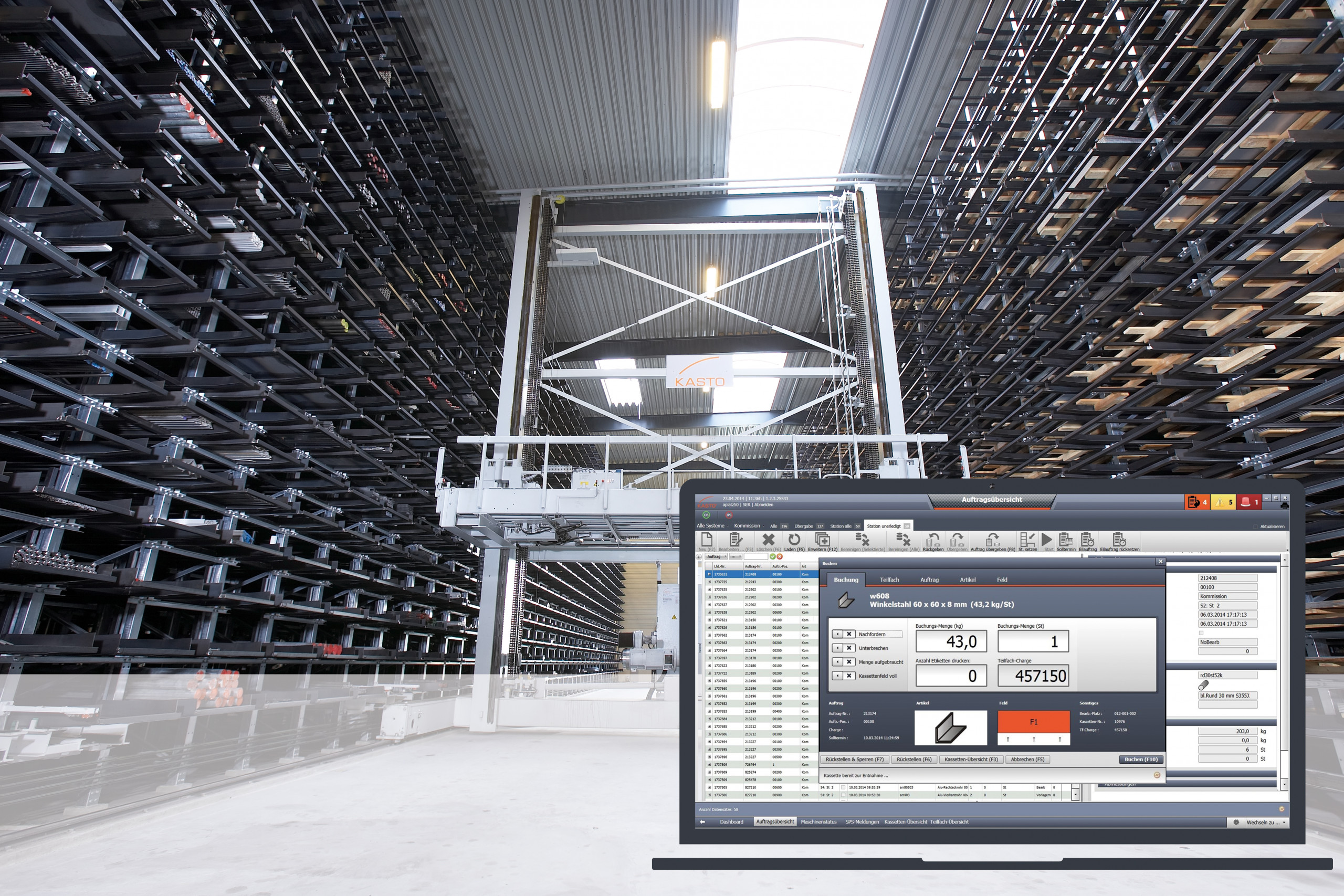
The Center compact automated sawing center offers another integration option. This modular system combines a tower storage unit, robot-assisted loading and unloading, a sawing machine, and downstream processing steps. This enables a continuous, automated material flow.
Web:
www.kasto.com