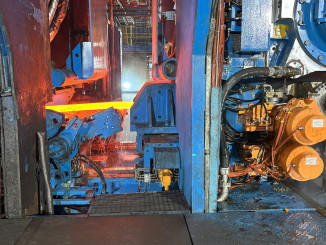
Data-driven plant assessment: SMS’s Plant Assessment Tool identifies the most viable strategies for decarbonization and strikes a balance between sustainability and profitability.
The steel industry is at a turning point: decarbonization and competitiveness must go hand in hand. At this year’s Worldsteel Breakthrough Technology Conference, the SMS Group presented its approach to supporting the industry with decarbonization.
© SMS
Customized processes for individual challenges
SMS develops technology that adapts to the specific requirements of each steel manufacturer – be it in relation to energy consumption, iron ore quality or legal framework conditions. “There is no one-size-fits-all solution for decarbonization. We need approaches that address exactly what really counts for our customers,” said Jochen Burg, CEO of the SMS Group, in his opening speech.
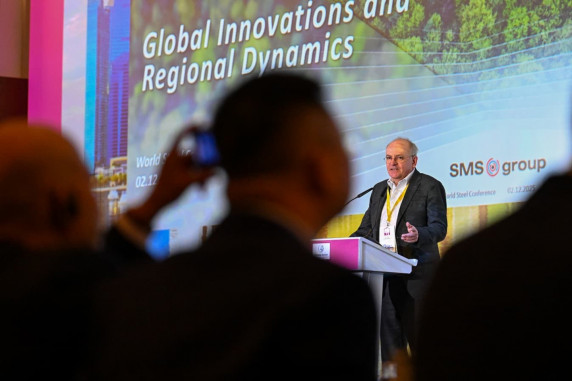
In his presentation “Reimagining Decarbonization: Unveiling Global Innovations and Regional Dynamics”, Thomas Hansmann, CTO of SMS Group, underlined the need for region-specific strategies and diverse technology for global decarbonization. Hansmann focused on Asia’s industrial growth and presented the upcoming implementation of SMS’s Paul Wurth Easymelt technology (electrically supported synthesis gas melting unit) at the Tata Steel plant in Jamshedpur, India. This retrofit will significantly reduce CO₂ emissions by electrifying existing blast furnaces – a flexible alternative to the direct reduction route and a milestone in the transformation of iron production. “The blast furnace and corresponding retrofits remain predominant under the current price conditions and will continue to play a key role in future contexts,” explains Hansmann.
Consulting services: Thinking sustainability and profitability together
The success of decarbonization measures depends on numerous variables. Implementations that are feasible today may not necessarily remain viable in the future. SMS therefore offers a data-driven decision-making tool that supports steel manufacturers on their complex path to decarbonization: the Plant Assessment Tool (PAT).
PAT uses live simulated models and sensitivity analysis to calculate the most viable pathways to decarbonization. It takes into account key factors such as energy prices and raw material availability as well as the impact on the carbon footprint in Scopes 1, 2 and 3. PAT enables detailed capex and opex assessments so that steel manufacturers can compare scenarios and make decisions for transformation.
Web:
www.sms-group.com