
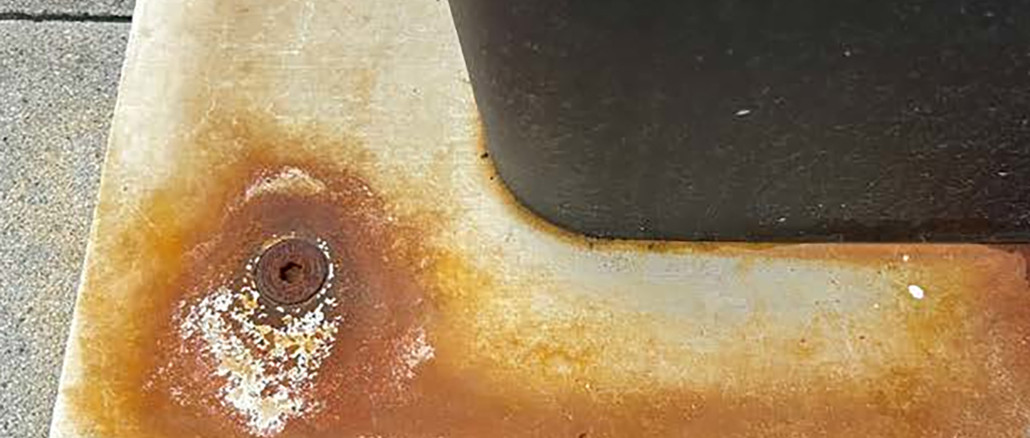
The Stainless Steel Information Center has published a revised technical bulletin on the topic of bimetallic corrosion. The question of whether stainless steel can be combined with aluminum, galvanized steel, or copper has been a concern for planners, designers, and fabricators for decades. The answer is more complex than is often assumed: It is not possible to make blanket statements about the compatibility of different materials.
With the 5th, fully revised edition (2026) of Technical Bulletin 829, “Stainless Steel in Contact with Other Materials,” the Stainless Steel Information Center provides guidance for anyone who plans, designs, or evaluates mixed-material constructions. Under certain conditions, the combination of different metals can create galvanic cells that cause the less noble material to corrode more rapidly.
Whether bimetallic corrosion—formerly known as contact corrosion—actually occurs, however, depends not only on the combination of materials, but also on the environmental conditions and the design.