Flexibility and automation are not mutually exclusive. Together with TRUMPF, the AL-KO Vehicle Technology Group has completely restructured its tube processing – and today benefits from a continuous process chain despite small batch sizes and a high number of variants.
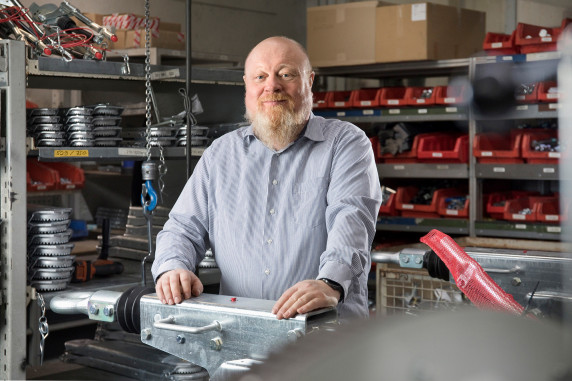
Is automation worthwhile even when batch size 1 is part of day-to-day business? For Andreas Jehle, Senior Production Planning Officer at AL-KO, this question has long been answered. “We work with very small batch sizes and a high number of variants,” he says. “But nobody can avoid automation these days.”
AL-KO develops and manufactures components for trailers, leisure and commercial vehicles as well as for applications in construction and agricultural technology. The company is based in Kötz, Bavaria, and employs around 3,000 people worldwide. “Our components are customer-specific, the quantities are individual and the batch sizes are often between one and ten,” says Jehle, describing the reality of production.
© TRUMPF
Small batch sizes are the norm
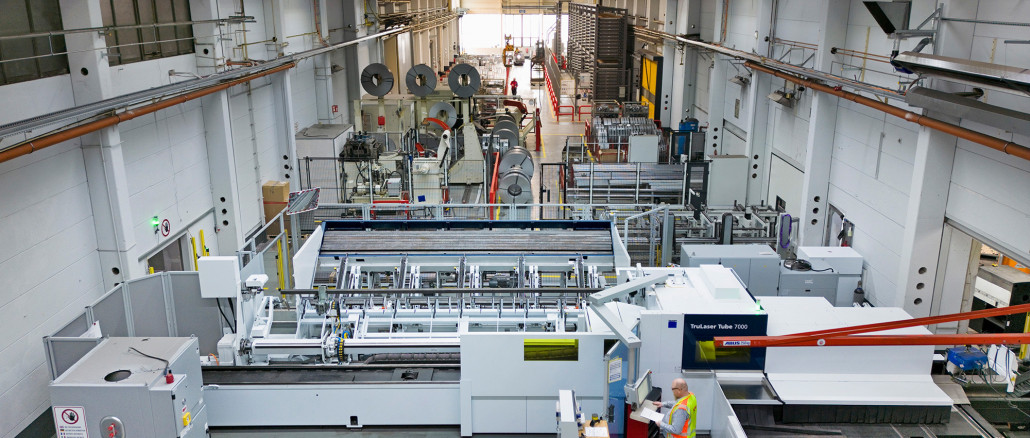
In 2023, AL-KO decides to make a comprehensive new start in laser tube processing. Together with TRUMPF, the AL-KO team led by Andreas Jehle is implementing an end-to-end tube process chain. When selecting a technology partner, AL-KO’s long-standing collaboration with TRUMPF was not the only decisive factor. “It was important for us to have a partner who thinks about the entire process,” says Jehle. In addition to the high productivity of the TruLaser Tube 7000, the system concept offered by TRUMPF was particularly convincing: from automated material supply to laser tube cutting and the integration of downstream processes. “We were looking for a stable, consistent process,” explains Jehle. “The individual components had to work together seamlessly – from the first cut to the bent component.”
Previously, AL-KO relied on sawing or plasma cutting for pipe processing. Milling and drilling were carried out in separate work steps. This not only tied up manpower, but also had a negative impact on throughput times. Some work steps were also outsourced – with the corresponding planning effort and loss of flexibility. In addition, the plasma cutting system used was already around 18 years old. “The programming effort was high and flexibility was limited. In short: it was time to act,” says Jehle.
Holistic approach instead of individual optimization
The heart of the new tube production facility is the highly efficient TruLaser Tube 7000 laser tube cutting machine from TRUMPF. An automated robot unloading system from Starmatik and an automated long goods warehouse from Stopa complete the system. “We have housed the Stopa storage system in a new hall extension,” explains Jehle. It stores pipes up to 6.40 meters in length and offers sufficient capacity for the daily material supply in pipe production. “The new warehouse takes the strain off our employees, who no longer have to move heavy parts by hand. This is not only more ergonomic, but also increases their safety,” explains Jehle. The improved material flow and inventory transparency also make the warehouse an important part of the process chain.
Robotic unloading from Starmatik complements the concept, particularly for higher quantities and in shift operation. “When larger orders are pending or we want to unload parts unattended, this is a clear advantage,” says Jehle. At the same time, he remains realistic: “With very small, highly mixed batches, unloading by employees is simply more efficient. And TRUMPF has also thought ahead here: the unloading automation is connected via a longitudinal conveyor belt that is integrated into the unloading unit of the TruLaser Tube. A program-controlled adjustment mechanism on the machine still enables manual unloading via the conveyor table, thus offering the flexibility that AL-KO desires.
The downstream bending process is also moving more into focus. An existing bending machine from transfluid will be replaced by a more efficient transfluid bending machine in the coming weeks. It is intended to ensure that the productivity of the TruLaser Tube will also be absorbed in downstream processing.
© TRUMPF
Laser tube cutting with a view to downstream processes
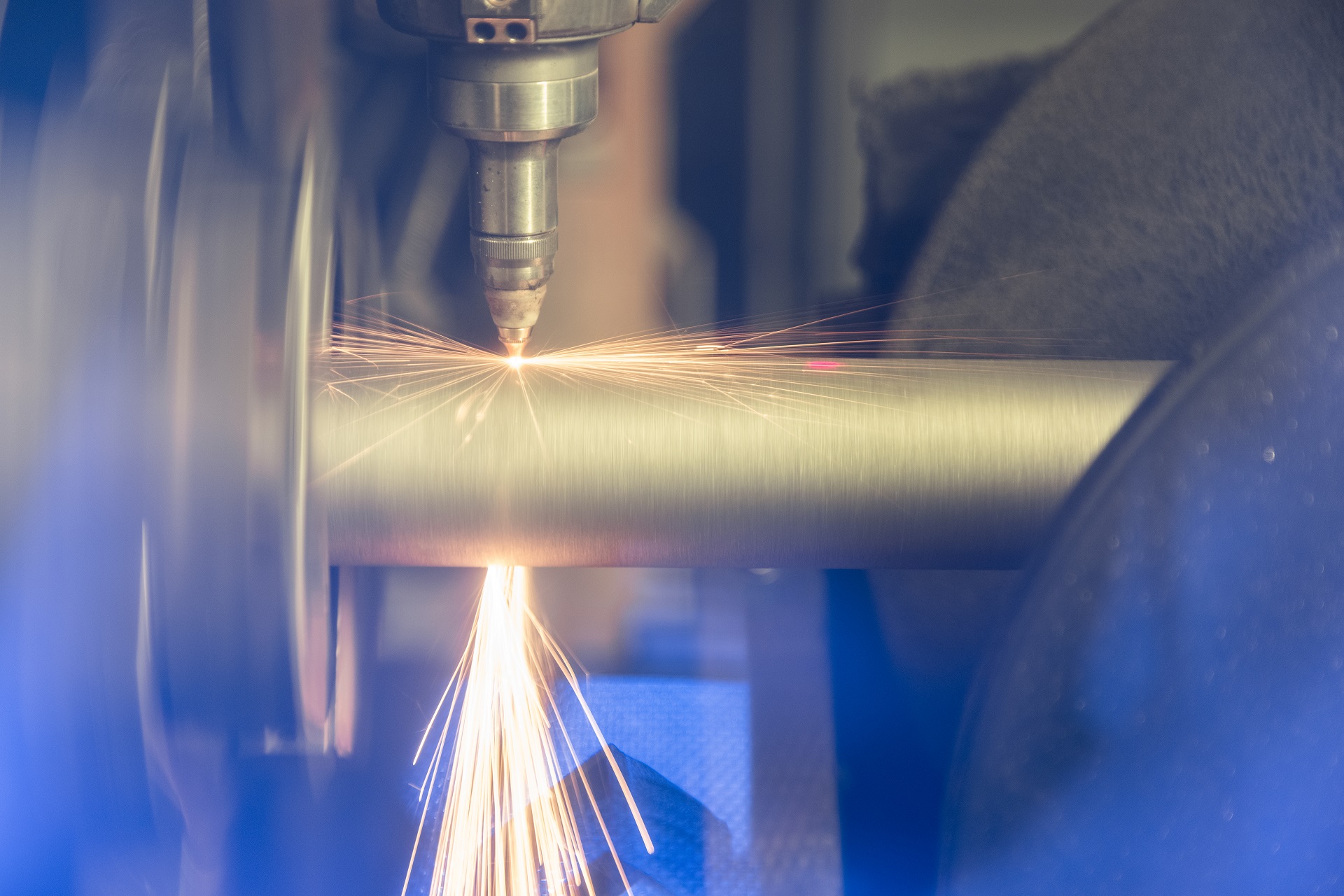
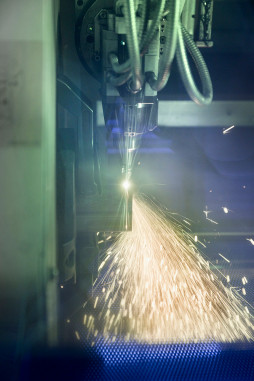
With the TruLaser Tube 7000, several processing steps can be bundled into a single operation: The highly productive machine inserts holes, cut-outs and contours directly during the cutting process, which means that downstream processing steps can be reduced or eliminated altogether.
Quality is another important topic in the pipe process chain – also at AL-KO, as the company motto is “Quality for Life”. “There must be no residue inside the pipe during mandrel bending or galvanizing,” emphasizes Jehle. “Dirt or spatter can lead to problems later on.” Functions such as the Spatter Guard from TRUMPF help to simplify cleaning the inside of the tube. A release agent is automatically applied during loading, which helps to remove deposits that form during the cutting process more easily. “This saves us valuable time,” says Jehle.
Programming the TruLaser Tube 7000 is also simple and saves time in work preparation. NC programs can be generated automatically from the CAD model after loading by the programmer. Programming is done with just a few clicks, virtually at the touch of a button, because the NC and cutting data required for program creation is determined in the background. The whole process takes place offline, meaning that the programmers can prepare the programs while the machine is producing. “We separate programming and production,” says Jehle. “This increases the utilization of the machine and gives us more flexibility.”
Automation as a necessary step
For AL-KO, the new process chain is not a short-term investment project, but a strategic decision. “Automation is not an end in itself,” summarizes Jehle. “It is necessary in order to remain competitive in a high-wage country – even with small batch sizes.”
The fact that not every step is trivial is part of the reality. But Andreas Jehle is certain that AL-KO is on the right track with the new pipe process chain: “We have to take a holistic view of processes and use automation in a targeted manner,” says Jehle. “Partners who take responsibility for the entire system are important.”
Web:
www.trumpf.de