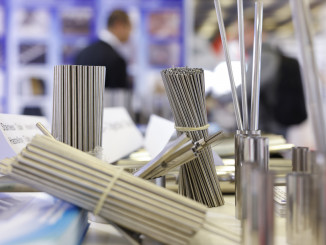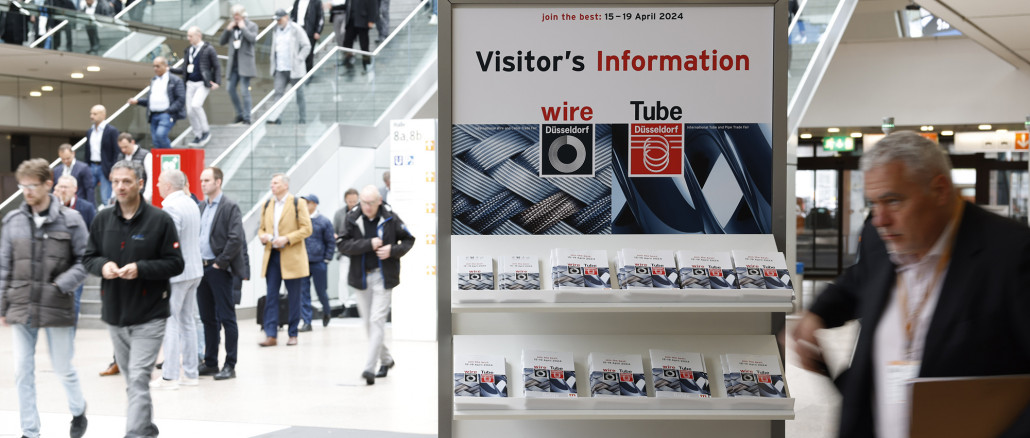
The Düsseldorf exhibition halls were packed when Wire and Tube, the world’s leading trade fairs for the wire, cable and tube industries, took place there. Several megatrends are driving the industries.

© Unsplash.com/Dominik Kuhn
A total of 2,600 exhibitors from 65 countries took part in mid-April, according to Messe Düsseldorf, the organizer of the two exhibitions. They covered the entire industrial value chain on 119,000 m² of exhibition space in 16 exhibition halls. Information on visitor numbers is not yet available.
Behind the crowds in Düsseldorf are a whole series of mega trends that are helping the wire and tube industry to grow worldwide. Often, however, the systems are not even visible, for example in the Gelsenkirchen stadium. A distance of 5 km is necessary for the beer to flow sufficiently to the more than 60,000 visitors. This means that Schalke 04 has one of the largest beer pipelines in the world.
Sterile and easy to clean
What is important here is how the pipes are made. Hygiene, sterility and sterility in the production process, during storage and transportation and when serving are a must in the beverage industry. There must be no cavities, gaps or dead spaces, the pipes must be easy to clean – and corrosion is taboo. It all depends on the material: Stainless steel or plastic are suitable, in combination with the right geometry.
The requirements in the pharmaceutical industry are even stricter. Sterility and hygiene are paramount here. This is because the numerous pipes are the arteries of every pharmaceutical plant and are subject to particularly high demands. Because these are usually complex systems, special parts are the order of the day.
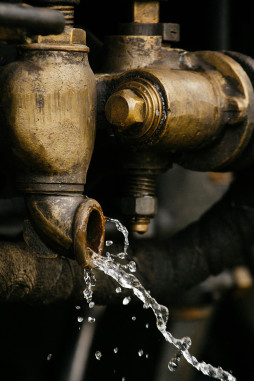
Even our most important foodstuff cannot do without pipes: water. According to the UN World Water Report 2024, 2.2 billion people worldwide have no access to clean drinking water. The situation is worsening, especially in cities. And this is against the backdrop that “population growth, socio-economic developments and changes in consumer habits are causing water consumption to increase by 1% annually”, as Unesco reports.
© Unsplash.com/Elimende Inagella
USA replaces lead pipes
According to the trade promotion agency Germany Trade and Invest (GTAI), the US water supply is in great need of action. Lead pipes in particular need to be replaced. As part of the “Infrastructure Development and Jobs Act”, the US government is making around 50 billion dollars available for the modernization and expansion of the water sector. Of this amount, 35 billion dollars are to flow into the fresh water supply. However, the need is even greater: the US Environmental Protection Agency (EPA) concludes “that around 625 billion US dollars will be needed between 2021 and 2040 to secure drinking water supplies alone”, reports GTAI.
What flows in must also flow out again: Water supply and disposal are two sides of the same coin. In the latter case, however, climate change is making the requirements more stringent: In order to better handle extreme weather conditions, wastewater and increasing rainwater must be regulated in sewer systems and sewage treatment plants in the best possible way. Drinking water also needs to be transported more efficiently.
Digitization records pipeline networks
Ideally, the pipes are part of digitized pipe networks. “Digital solutions can lead to savings and optimization,” explains German Water Partnership (GWP), a network of the German water industry. By networking process and planning data, the technical and organizational process and value chain of a water infrastructure can be mapped.
Water 4.0 needs sources from which data can flow. This is why, for example, pipes in the pipeline network and tanks are equipped with sensors whose data is recorded and evaluated. “This results in various data-driven applications that aim to improve system understanding, system monitoring and control,” explains a technical paper published by Gelsenwasser AG at the German Technical and Scientific Association for Gas and Water (DVGW).
Such a digitalization strategy is only useful if the pipes are too. This is why drinking water pipes, for example, are made from resistant materials. Copper, stainless steel and certain plastics guarantee corrosion resistance to prevent damage to health. The pipes must be able to withstand temperatures and pressures and have low porosity.
© Terranets BW
Energy demand leads to pipeline expansion
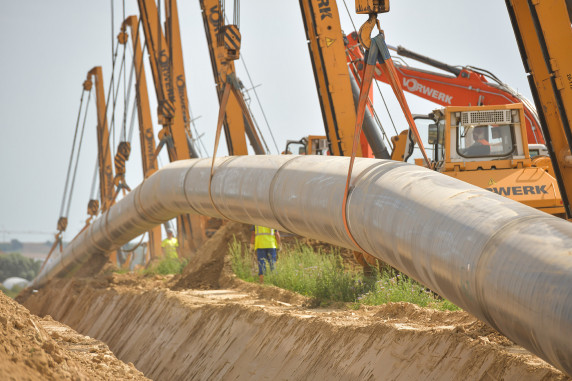
But people are not only thirsty for water, their hunger for energy is also growing. Whether it’s the expansion of liquid gas pipelines in the USA, new hydrogen networks in Europe or pipelines in China, India and South East Asia – there is work waiting for the producers of pipes and manufacturers of pipe processing systems.
Quality counts: pipeline steels must ensure the longevity of the pipeline. High operating pressures demand everything from the pipes – including their welds – during the transportation of the medium. In some cases, they have to withstand high mechanical stresses and environmental influences such as extreme temperatures. The pipe industry must combine quality with cost-effective production.
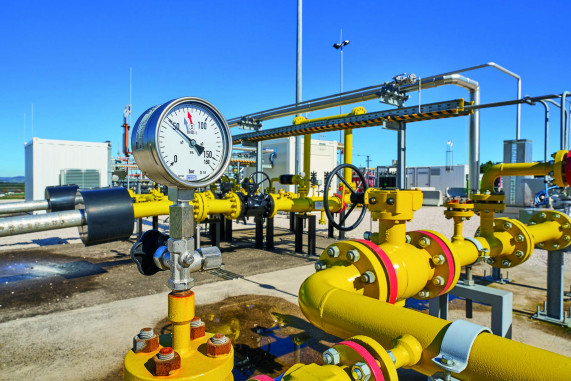
In Germany, the new H2 core network will give hydrogen use a major boost. By 2032, a pipeline network of over 9,000 km for hydrogen transportation is to be created in Germany. It will be part of a European hydrogen network. In order to use hydrogen, production sites, storage locations and consumers – such as industrial or commercial parks – must be connected. 60% of existing pipelines must be converted from gas to hydrogen for the new core network and 40% must be newly built.
Mannesmann Line Pipe has been dedicated to the transportation of hydrogen for years. “With this experience, we are now also in a position to offer customer-oriented solutions for the storage of hydrogen,” adds the company. Mannesmann steel pipes have already been in use as hydrogen tube storage systems for some time.
Swen Gottschal / THE GAS AND WATER ECONOMY
Special steel for hydrogen pipes
Other pipe manufacturers are also ready for the use of hydrogen. For example, the hydrogen transport pipeline for Snam’s high-pressure gas network in Italy has been certified. The collaboration between Corinth Pipeworks and Snam has resulted in “a technically and economically viable solution for the safe transportation of hydrogen under high pressure through large-diameter, high-strength steel pipelines”, explains Corinth Pipeworks. The pipes produced today and installed in the gas network could enable the energy mix of tomorrow. In accordance with the standard, the L415ME grade steel pipes with an outer diameter of 26″ and thicknesses of 11.1 and 15.9 mm were tested in the laboratory at maximum pressure and up to 100% hydrogen.
Benteler also manufactures its Hyresist pipes specifically for hydrogen applications. The seamless line pipes support the construction of hydrogen distribution networks and are hot-rolled, cold-drawn and available in several material classes. “A decisive factor for the quality of Hyresist pipes is the high degree of purity of the steel grades that we produce in our steel mill in Lingen.Optimized mechanical values and the high purity of the steel materials prevent hydrogen embrittlement,” reports the company.
In addition to the low-alloy steel grades X42 and X52, which are suitable for transporting gaseous hydrogen and hydrogen mixtures in accordance with EIGA guideline IGC Doc 121/14, thyssenkrupp has optimized material concepts for the strength range up to X70 in its range. “These steels are optimized with regard to the expected standard requirements of longitudinal and spiral seam pipes for hydrogen transport – especially with regard to limited carbon, phosphorus and sulphur contents,” explains the steelmaker.
©Jan Oelker
Corrosion resistance must be ensured for hydrogen pipes. To this end, the inner surface is therefore supplied “free of surface deposits (in accordance with ISO 3183)”, reports Mannesmann Line Pipe. “Furthermore, internal points of attack for the hydrogen are kept to a minimum by a guaranteed lower phosphorus and sulphur content compared to the Eiga guideline.” A further reduction in the carbon equivalent also ensures the weldability of the pipe material.
Pipes from renowned manufacturers are already in use. Mannesmann Grossrohr GmbH, for example, supplied pipes to connect the Brunsbüttel LNG terminal. The pipeline with a diameter of DN 800 has a length of around 54 km. The 3,200 pipes are specified so that hydrogen can also be transported through the pipeline in the future.
Up to 53,000 km of hydrogen network
The European Hydrogen Backbone – an initiative of over 33 energy infrastructure operators – is also set to be a major success. This would connect several pipeline projects that transport more than 4 million tons of hydrogen from North Africa to Europe and within Europe every year. The aim is to promote market competition, security of supply, security of demand and cross-border cooperation. A pipeline network of 53,000 km in length could be created by 2040.
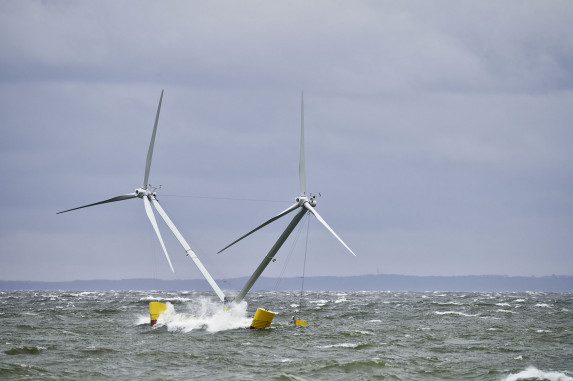
Not only hydrogen is needed for the energy transition, but also green electricity itself. Wind turbines are also coming into play. In future, they are to be erected at great depths in order to make use of the strong and constant winds. “Stronger and more constant wind speeds are synonymous with a more reliable source of energy,” explains cable system manufacturer Nexans. New high-voltage cables are becoming an enabler.
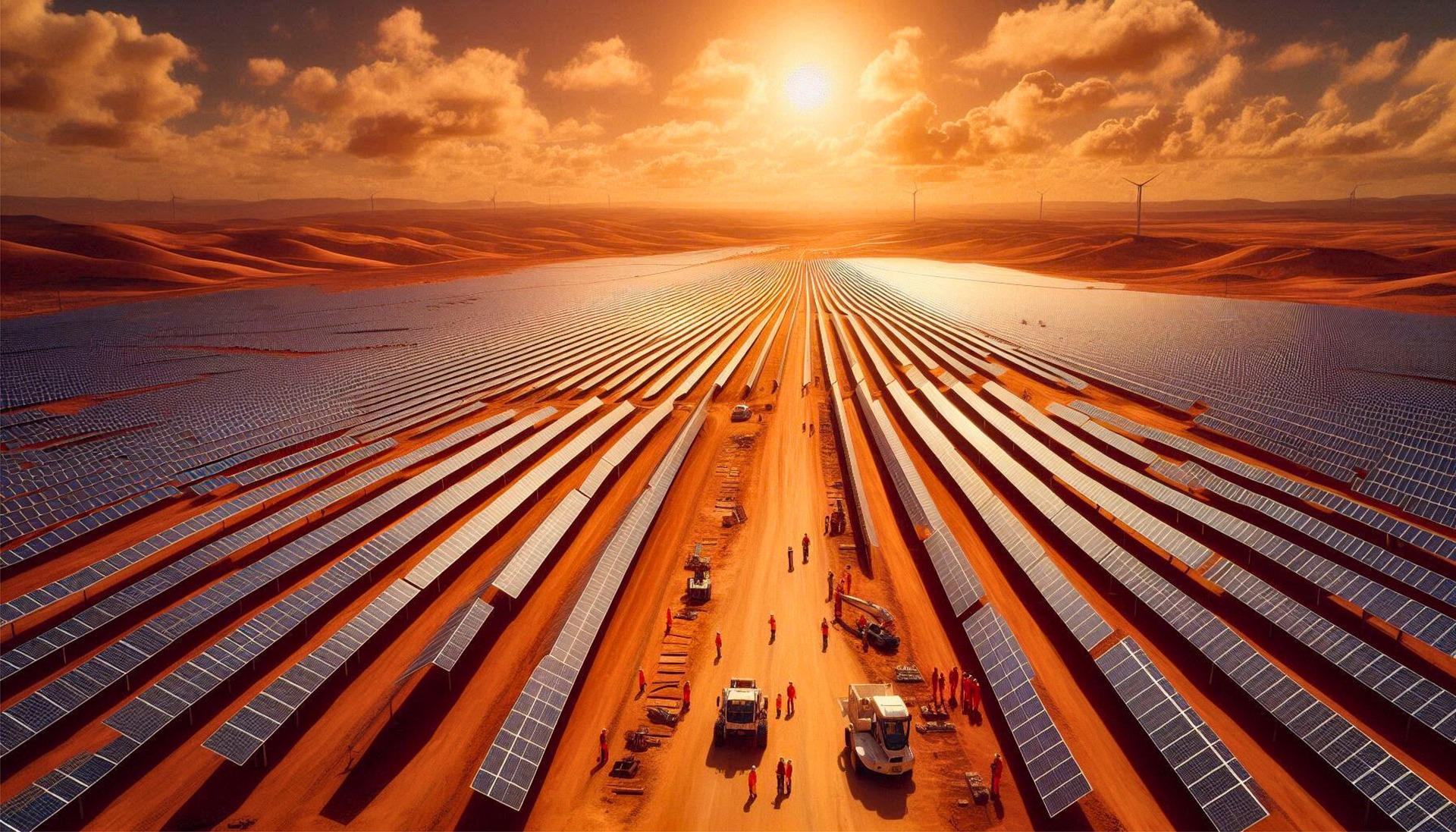
Offshore wind energy is set for global growth after recording the second-highest number of new installations in 2023, according to the Global Wind Energy Council (GWEC). In 2023, the wind industry installed 10.8 GW of new offshore wind capacity, bringing the total global capacity to 75.2 GW. The new capacity increased by 24% compared to the previous year. The GWEC assumes that this growth rate will continue until 2030.

©
Special cables for deep-sea wind energy
Floating offshore wind turbines are anchored to the seabed with anchor lines, while conventional turbines are firmly anchored to the seabed. This is why cable manufacturers such as Nexans have long been focusing on wind power in the deep sea. “From 2031, floating wind turbines will account for more than 10% of annual offshore wind turbines,” explains the company. Cables for transporting energy on land must be able to withstand the conditions at sea. A dynamic cable moves in the water and on the seabed to the rhythm of the floating wind turbine. In 2021, Nexans succeeded in qualifying the first dynamic 145 kV cable for a water depth of 1,300 meters. This cable was selected for the Jansz-lo project, about 200 km off the coast of northwest Australia.
Cables are also needed to operate a wind turbine, to generate electricity and to transport the electricity generated from the turbine to the consumer. Power cables are particularly in demand, but also enameled wire for the generator and in the transformer. Some of the cables are subject to permanent movement and vibration and must be able to withstand compression and torsion. In addition, they must be able to withstand thermal stress, electrical strength, halogen-free, UV radiation, ozone and salt water.
There is also a lot for the cable industry to do on land. By 2050, the EU wants to reduce its greenhouse gas emissions by 80% compared to 1990 levels. This requires a European energy system. For this reason, national electricity grids in Europe are being connected by cross-border lines, known as interconnectors.
© Transnet BW
Europe must expand its electricity grids
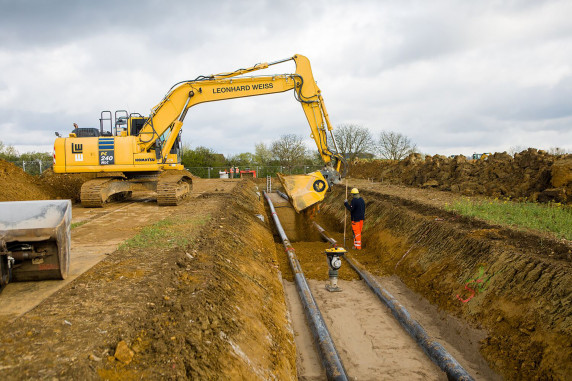
The German transmission system operator Amprion explains that the electricity grids were not originally designed to transport ever larger amounts of energy over ever longer distances. This is why grid expansion is necessary throughout Europe. This is already happening, for example, with the construction of the Suedlink line from northern to southern Germany. Currently, 525 kV cables are being laid over 700 km for high-voltage direct current (HVDC) transmission.
The Suedlink cables have a diameter of 15 cm and consist of an inner semiconducting layer, among other things. This serves as a barrier to prevent contamination between the layers. In addition, there is cable insulation, glass fiber elements, welded aluminum foil and an outer sheath. The conductor is made of copper. The two cable manufacturers NKT and Prysmian are producing a total of 2,420 km of cable for Suedlink. The finished cable sections are up to 2 km long.
Now continents are to be connected with each other: The world’s longest undersea cable, at almost 1,400 km, and in some places the deepest at 3,000 m, is being used for the Euro-Africa Interconnector. The high-voltage direct current (HVDC) transmission line will link the power grids of Greece, Cyprus and Egypt. The energy highway between Europe and Africa will initially be launched with a transmission capacity of 1,000 MW. Commissioning is scheduled for between 2028 and 2029.
Web:
www.wire.de
www.tube.de